Dukhtar (2014): review and analysis of Pakistan's mountain thriller
Some thrillers announce themselves with explosions and body counts. Dukhtar (2014), the debut feature of Pakistani writer-director Afia Nathaniel, opens with something quieter and far more unsettling: a mother braiding her ten-year-old daughter's hair on the morning of the girl's engagement to a tribal leader old enough to be her grandfather. What follows is a 93-minute flight across the mountains of northern Pakistan that critics at the LA Times called "a gorgeous, suspenseful cinematic achievement" — and a film that became Pakistan's official submission to the 87th Academy Awards.
The story: a road movie built on refusal
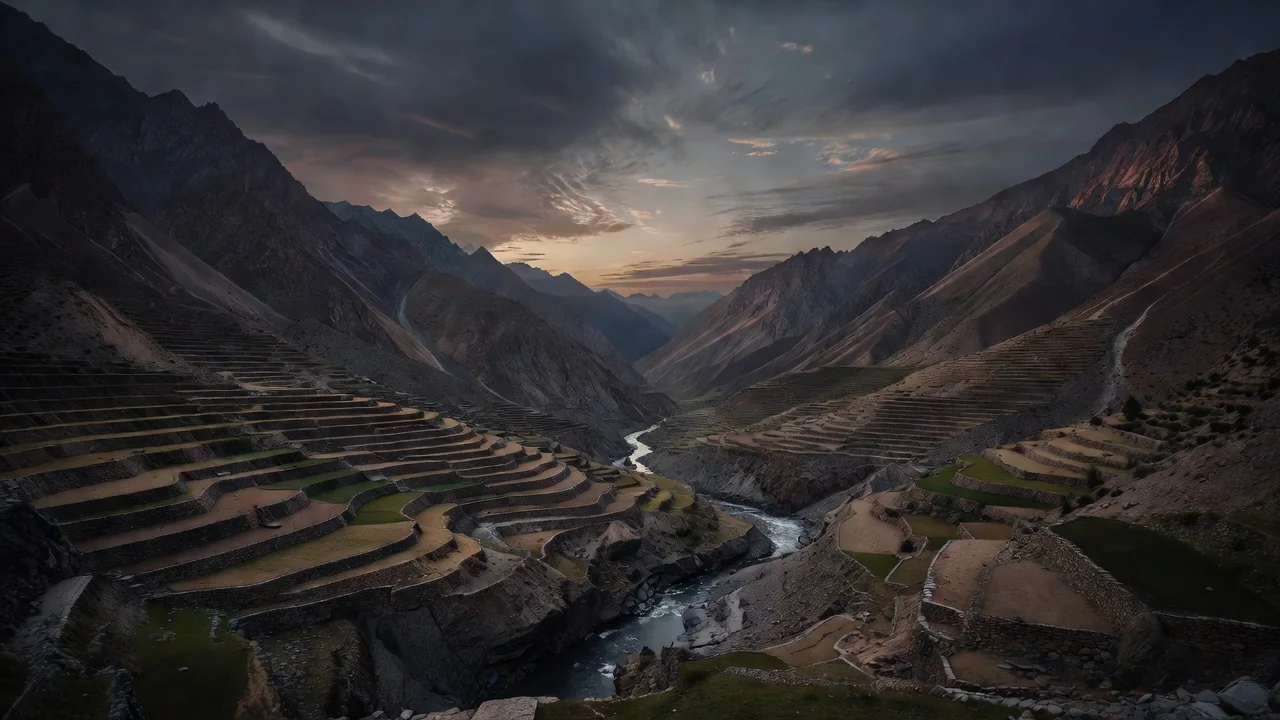
Allah Rakhi (Samiya Mumtaz) was married off at fifteen. When she learns that her own daughter Zainab (Saleha Aref) is to be handed over in a marriage arranged to settle a tribal feud, she makes the one choice her world considers unforgivable: she says no, and she runs. Mother and daughter slip away into the high valleys, pursued by men for whom the escape is a matter of honour. On the road they meet Sohail (Mohib Mirza), a truck driver with his own buried past, who becomes their reluctant escort through a landscape as beautiful as it is dangerous.
Nathaniel structures the film as a pursuit, but the suspense is never mechanical. The Village Voice, naming it a Critics' Pick, noted that the film "never changes from dream to nightmare. Instead, it inhabits a heightened, brilliantly colorful version of what lies between; call it reality." The chase matters less than what the chase reveals: a girl seeing the world outside her compound for the first time, and a mother rediscovering the will that was taken from her at fifteen.
Performances that carry the weight
- Samiya Mumtaz plays Allah Rakhi with what the New York Times called a "quiet authority", combining "a mother's passionate concern with glimmers of an awakening consciousness".
- Saleha Aref, in her first screen role, gives Zainab a watchfulness that never tips into sentimentality.
- Mohib Mirza brings wounded charm to Sohail, turning the truck cabin into the film's safest — and most fragile — space.
What the critics said
| Outlet | Verdict |
|---|---|
| LA Times | "A gorgeous, suspenseful cinematic achievement… a stunning, emotive work that takes to task oppressive patriarchy." |
| Variety | "Nathaniel proves her mettle in a national industry where distaff directors are rare." |
| The Hollywood Reporter | "A great against-all-odds adventure." |
| Indiewire | "Groundbreaking — unlike anything done by a director from this part of the world." |
| Huffington Post | "A road journey to end all road journeys." |
| People Magazine | "Riveting and edifying" — Pick of the Week, 2015. |
Why it still matters
A decade on, Dukhtar remains a reference point for what independent South Asian cinema can do: a locally rooted story, told with genre confidence, that travelled to more than twenty countries without surrendering its accent, its landscape or its politics. It is a film about child marriage that refuses to lecture, and a thriller that refuses to dehumanize. For viewers discovering it now, the advice of the critics still stands — as Brown Girl Magazine put it, "Dukhtar is a must-see film."