Dukhtar ending explained: water, road and the open door
Dukhtar ends the way a chase ends when the people running have nowhere left to run: not with a fight won, but with a decision paid for. Afia Nathaniel's 2014 film spends ninety-three minutes moving a mother and a ten-year-old girl across northern Pakistan, and its final act moves them into the one place the film has taught the audience to distrust, a city full of witnesses.
If the last ten minutes feel as if they withhold something, that is deliberate. The closing movement refuses the comfort of a verdict while still answering the question the story asked in its first scene: whether a mother can refuse a bargain made over her daughter's body.
The last act in plain terms
Allah Rakhi (Samiya Mumtaz) has already done the impossible part. She walked out of Daulat Khan's household with Zainab (Saleha Aref), crossed a landscape controlled by men who own the roads, and found an escort in Sohail (Mohib Mirza), a truck driver who puts her safety above his own. What she has not done is stop being a daughter herself. She has not seen her mother since she was fifteen, when she was given to a man decades older and carried away from Lahore to the mountains.
That missing visit is the hinge of the final act. Sohail takes the pair to a remote village where they could disappear, and Allah Rakhi asks for one detour: Lahore, her mother, one afternoon.
It is the least sensible decision available and the most human one. The film does not present it as a mistake dressed up as courage. It presents it as a need that has been suppressed for twenty years and cannot be suppressed for one more day.
The reunion happens in public, on a street of music, shopping and food carts. Her mother is being watched. The family recognises the women it has been hunting. From that moment the film stops being a road movie and becomes something closer to a countdown, and it cuts away from the consequences instead of dramatising them.
Zainab's future is left open. The audience is not told whether she is taken back, hidden, or passed to another arrangement.
Why the lake returns at the end
The film opens on still water: a woman dressed in white, floating in a red boat. The image returns near the close, and it only makes sense on the second pass. Water in this film is the one surface nobody owns. Every road is watched, every village belongs to a tribe, every house has a man at the door, but the lake belongs to no one and therefore cannot be policed.
The colours carry the argument. White is what a bride is dressed in, and also what a body is wrapped in. Red is the wedding colour and the colour of the boat that carries her, so the two meanings sit in the same frame and refuse to separate. The boat carries her alone, which is the point: Allah Rakhi's journey begins as something done to her and ends as something she does, and the film marks the difference with a shot that repeats rather than resolves.
The road is the only room they own
Interiors in Dukhtar belong to men. Daulat Khan's house is a hierarchy with walls, the rival chief's compound is a negotiation with a child as the signature, and the villages along the route are places where a woman travelling without a man is immediately visible. The truck cabin is the single interior the film allows to be tender, and it is tender because it moves.
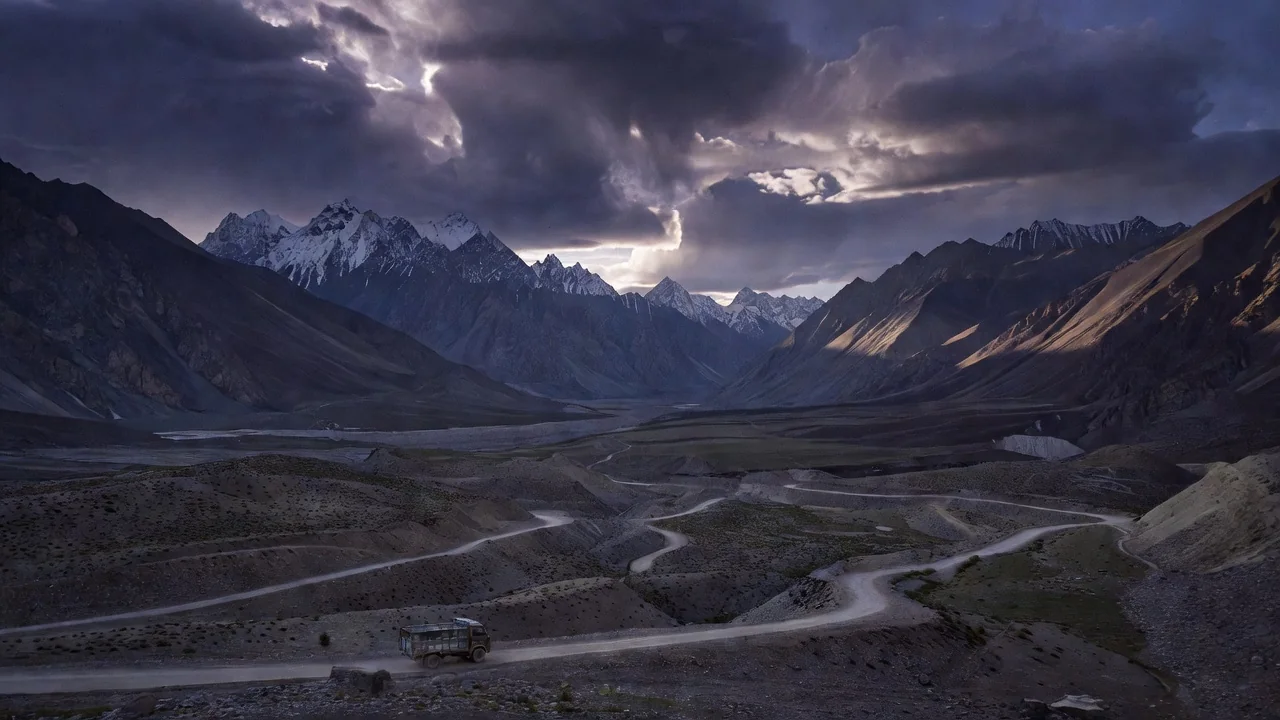
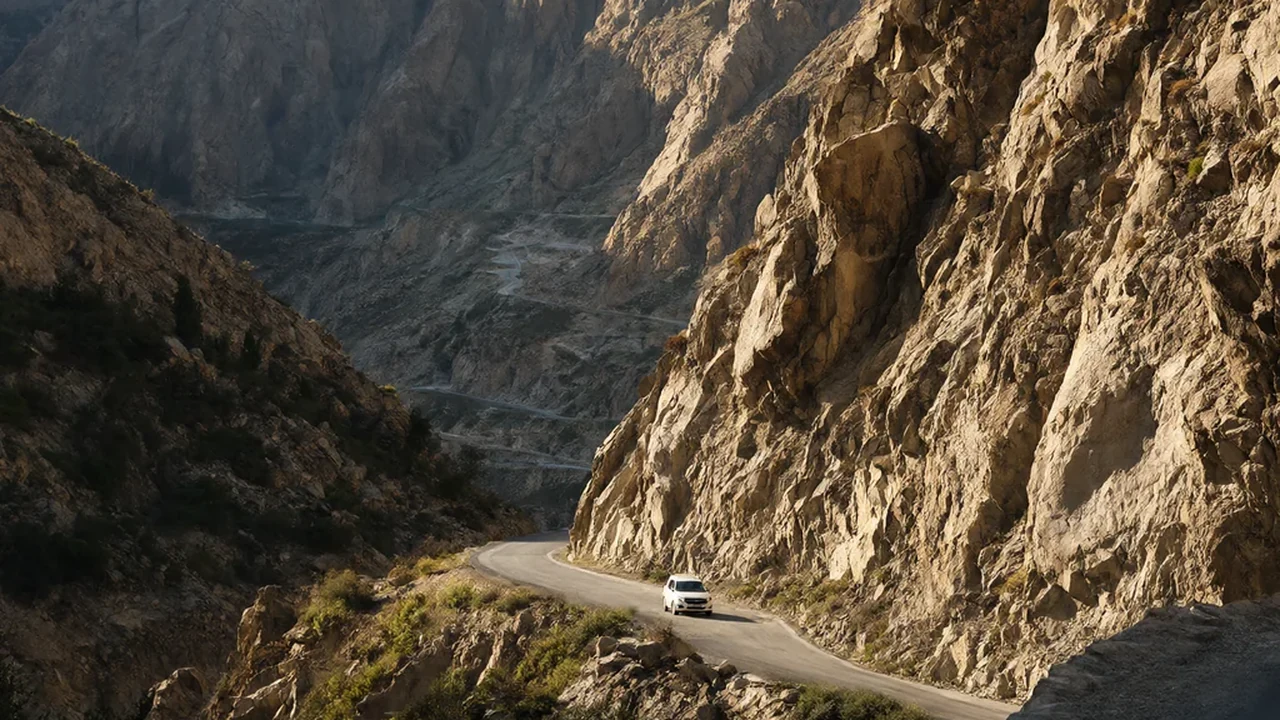
Nathaniel and her editors cut the chase so that the landscape does the threatening. Wide shots place two small figures against rock and river, and the mountains do not look majestic so much as indifferent. The danger is not that the country is hostile. The danger is that it is enormous, and the women have no legal standing inside it.
| Detail | Record |
|---|---|
| Director, writer, producer | Afia Nathaniel, feature debut |
| Runtime | 93 minutes |
| Languages | Urdu and Pashto |
| World premiere | 5 September 2014, Toronto International Film Festival, Discovery section |
| Pakistani release | 18 September 2014, nine cities |
| Academy submission | Pakistan's entry for the 87th Academy Awards, not nominated |
| Lead performances | Samiya Mumtaz, Saleha Aref, Mohib Mirza |
What the crowd in Lahore changes
In the mountains the danger is small and known: two tribes, a few vehicles, a network of men with phones. In Lahore the danger is anonymity turned inside out. The grandmother's neighbourhood is not a sanctuary. It is a place where the family's reach is longest.
This is also where the film's politics become concrete rather than scenic. Child marriage in the northern areas, including the custom of handing over a girl to settle a blood feud, is not an abstraction in Dukhtar. It is a transaction with witnesses, and the witnesses include women who survived the same transaction and say nothing. The street scene puts Allah Rakhi in front of exactly those witnesses.
Three ways to read the final image
- As a death: the still water and the white clothing belong to mourning, and the boat is the passage the film will not show.
- As a memory: the shot repeats the opening so closely that it can be read as the mother's last clear thought rather than as an event.
- As a transfer: the boat carries one figure, and by the end the figure the audience cares about is the daughter, not the mother.
None of these readings is confirmed by dialogue, and the film is carefully built so that none can be ruled out. What can be said with confidence is that the ending withholds a rescue. There is no courtroom, no reform, no official who arrives to correct the bargain.
Why the open ending is the argument
Reviews at the time noticed the same refusal. The Hollywood Reporter praised the film for an outcome that is never a foregone conclusion, which is a polite way of saying that the third act does not cash the cheque the first act wrote. That is not a flaw in construction. It is the reason the film travels: a story that ended with a rescued girl would be a story about an exception, and Dukhtar is insistently about the rule.
The title means daughter, and the film keeps the word singular on purpose. Zainab is not a symbol of all daughters, she is one girl whose mother made one decision, and the last act insists on the cost of that decision rather than on its reward. If you want the film's thesis in a sentence, it is this: refusing a bargain does not undo the bargain, it only moves the bill to the person who refused.
That is why the final shot is water and not a road. Roads in this film lead to checkpoints. Water is where the story stops being watched, and where the audience is left holding the question the characters can no longer ask out loud.