Dukhtar locations: where the film was really shot
Dukhtar is a film about a journey, and it was made the hard way: on location, at altitude, with a crew moving through terrain that has no studio substitute. The locations are not decoration around the story. They are the reason the story works, because the distance between a mountain village and a city street is the whole distance the film is asking about.
Afia Nathaniel's production notes are unusually specific about where the cameras went, which makes it possible to separate what is documented from what has been assumed. The confirmed record is narrow: the film was shot entirely in the northern areas of Gilgit-Baltistan, with additional work at Kallar Kahar. Almost everything else that circulates about the shoot is either an inference from the finished film or repetition of another writer's guess.
Where Dukhtar was actually shot
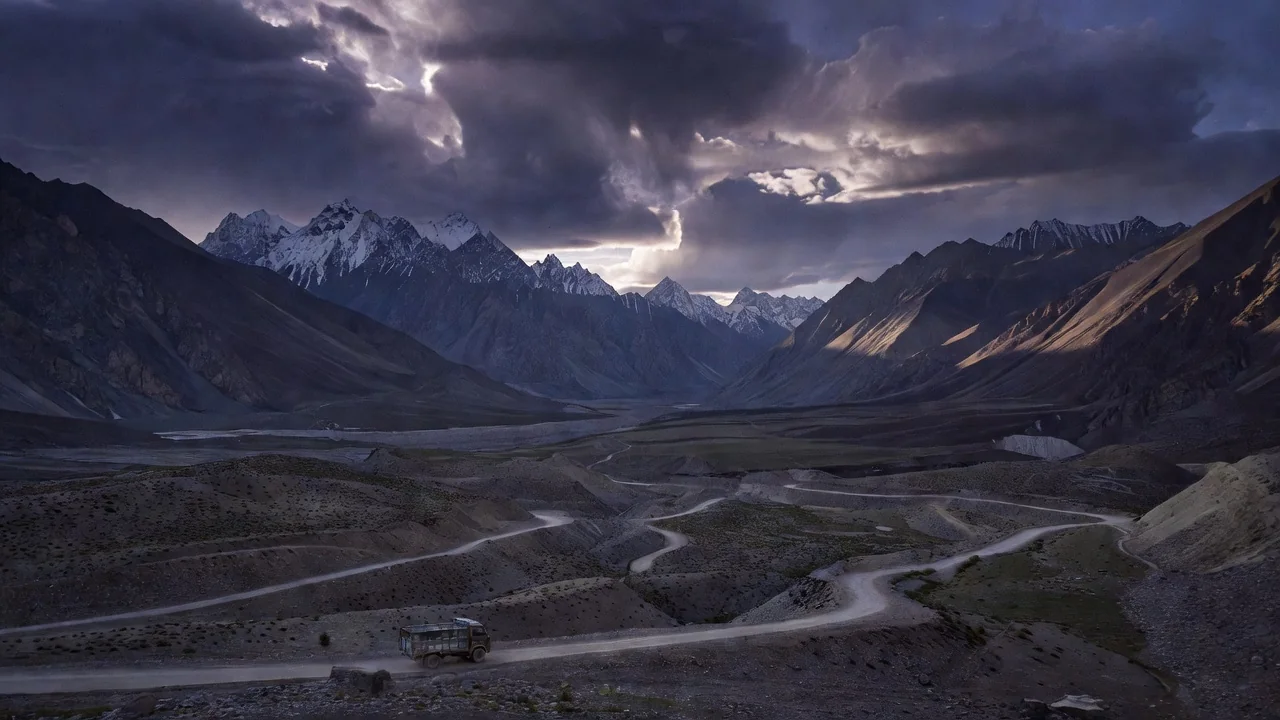
The documented locations are Skardu, Hunza, Gilgit and Ghizer, all in Gilgit-Baltistan, plus Kallar Kahar in Punjab. Skardu sits in a high basin where the Indus meets the Shigar, ringed by rock that photographs as sheer wall. Hunza gives the production its green terraces, apricot orchards and the long, glaciated valleys that make the middle of the film look almost hospitable. Gilgit is the administrative and transport hub, the place every road in the region has to pass through.
Ghizer, to the west, is the emptiest of the four and supplies the stretches where the film can put two figures on a road and nothing else in the frame.
Kallar Kahar is the outlier and the tell. It lies in the Salt Range in Punjab, on the old road between Islamabad and Lahore, and it gives the production a lake and lower hills that the northern valleys do not put in the same frame.
The five locations and what each supplies
| Location | Region | What it gives the film |
|---|---|---|
| Skardu | Gilgit-Baltistan | High basin, river confluence, bare rock walls |
| Hunza | Gilgit-Baltistan | Irrigated terraces, orchards, valley depth |
| Gilgit | Gilgit-Baltistan | Road hub, traffic, the feeling of a checkpoint town |
| Ghizer | Gilgit-Baltistan | Empty road, distance, almost no built environment |
| Kallar Kahar | Punjab, Salt Range | Lake and hills used as a transition south |
Lahore on screen, Lahore on the schedule
The story ends in Lahore, and the film visibly changes texture when it gets there: narrow streets, shopfronts, crowds, the noise of a market instead of wind. Dawn's review described the direction as moving seamlessly from the landscape of northern Pakistan down to urban Lahore, which is a fair description of what is on screen.
What is not in the production record is a Lahore shoot. The confirmed list stops at Gilgit-Baltistan and Kallar Kahar. A Kashmir shoot is also not confirmed, despite the frequency with which the film is described as a Kashmir story; Skardu is in Gilgit-Baltistan, and the film's tribal-conflict plot is not tied to the Kashmir dispute. Treat the city and valley claims beyond the documented five as unconfirmed.
Two cinematographers, one palette
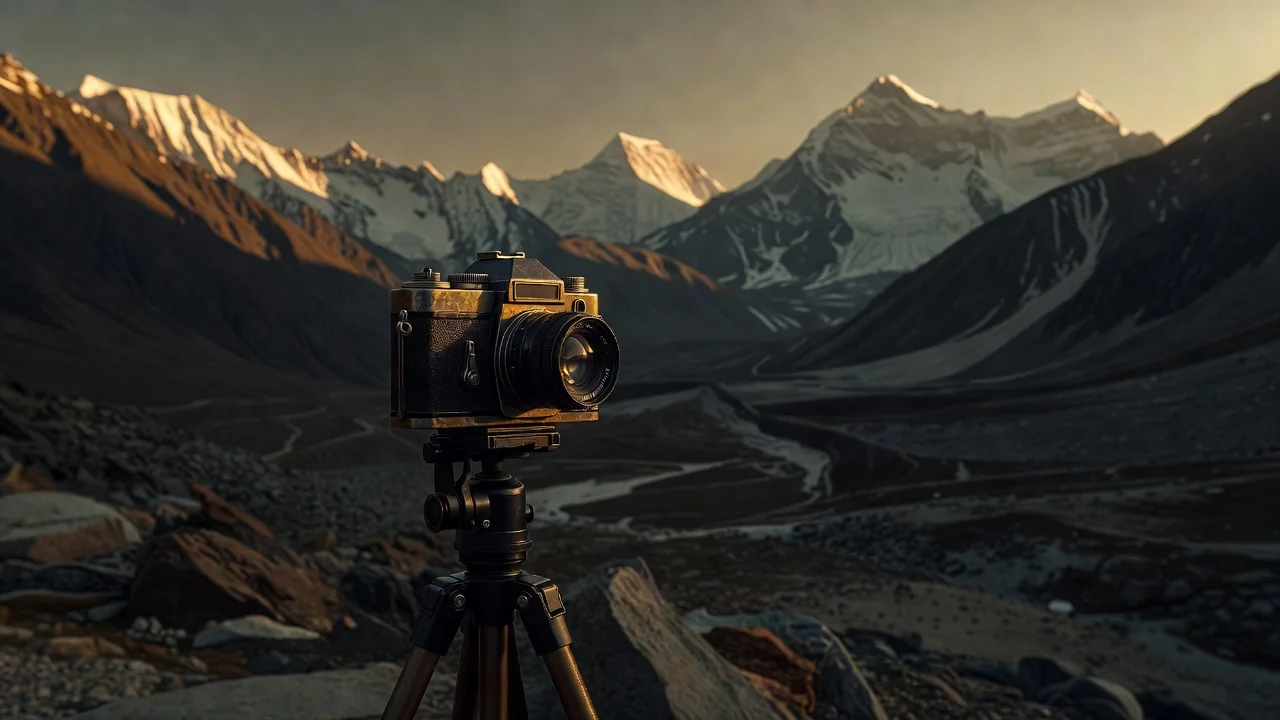
The camera work is credited to Armughan Hassan and Najaf Bilgrami, with Hassan also cutting the film alongside Nathaniel. Two directors of photography on a ninety-three minute independent feature usually means a schedule split by geography or availability, and the finished film shows a consistent eye rather than two competing ones: wide, patient, and reluctant to move the camera when a person is talking.
The palette is built on three registers. High country is blue-grey rock, pale dust and a sky that is almost white at midday. Interiors are warmer and closer, lit by fire and by whatever light the room allows. The truck is the one saturated object in the film: decorated panels, fabric, colour, and the only thing on screen that is allowed to be joyful.
How altitude shapes the suspense
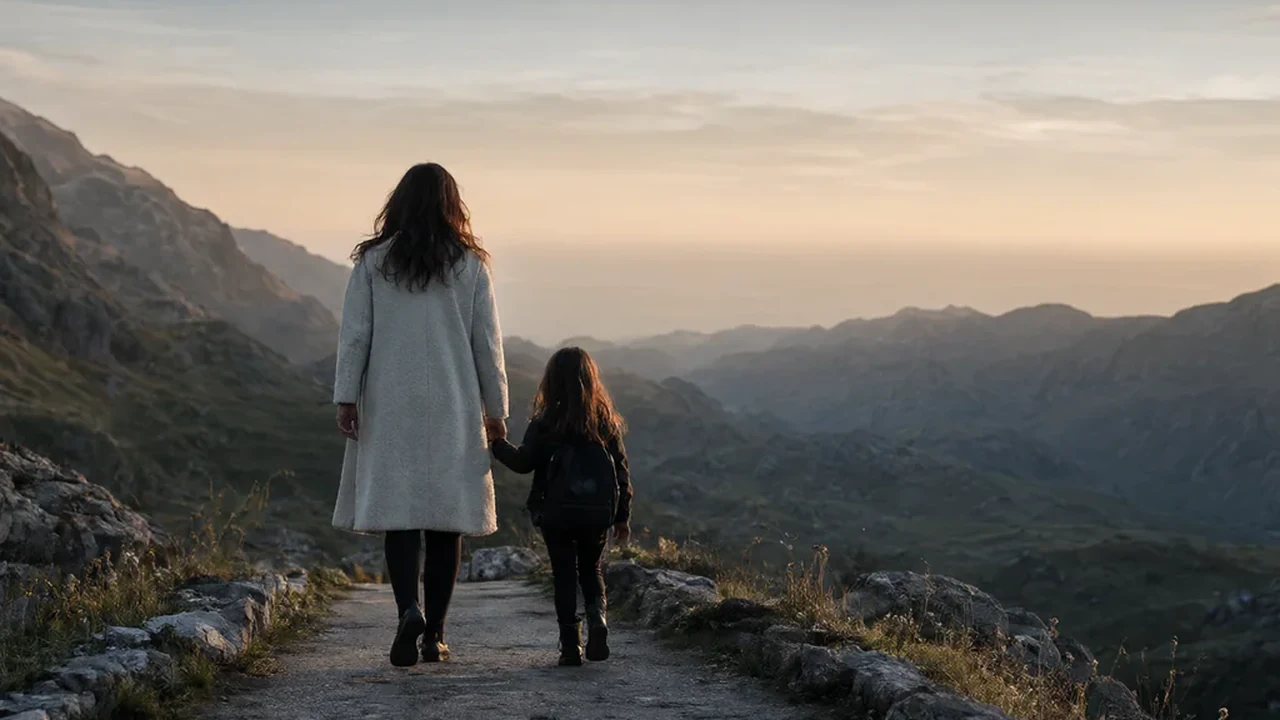
Nathaniel uses the wide shot as a threat. When the camera pulls back in the mountains, the two women get smaller and the rock gets larger, and the audience reads vulnerability without a line of dialogue. When the camera moves in, it usually moves into a cab or a doorway, which is the film's way of saying that safety is a matter of walls rather than of distance.
The pursuit is staged with an attention to vehicles that most road movies skip. The pursuers have cars and phones; the fugitives have a truck that is slow, loud and impossible to hide. That asymmetry is a location decision as much as a script decision, because a truck on a single mountain road is visible for kilometres, and the film lets the audience feel that visibility in every wide shot.
- The wide shot makes the women small against rock, so the audience feels exposure before anything happens.
- The camera stays still in conversation and moves only when a vehicle moves.
- Interior light is warm and practical, exterior light is flat and pale, and the film rarely mixes the two in one shot.
Why the landscape reads as a character
Critics reached for the same word repeatedly: spectacular. The Hollywood Reporter credited the film's location shooting with carrying much of its momentum, and that is the right emphasis. The mountains are not a backdrop against which a family drama happens. They are the reason the escape is hard, the reason the chase is plausible, and the reason the ending has somewhere to go that is not a courtroom.
For a first feature made on a budget assembled over years, the location work is the film's clearest argument for Pakistani cinema's technical capacity. Norway's Sorfund money paid for the shoot, but the images were made by a Pakistani crew in Pakistani terrain, and the result is a film that could not have been shot anywhere else.